

Empowering Yemeni Young Women and Adolescent Girls through Access to the Digital Economy
Project Name: Empowering Yemeni Young Women and Adolescent Girls Through Access to the Digital Economy.
Project Objective: To empower young women and adolescent girls in Yemen by ensuring they have equitable access to the digital economy.
Project Duration: 1 January 2025 – 31 January 2028 (36 Months).
Target Group: 525 young women and adolescent girls (aged 17 – 35 years).
Targeted Areas: Al-Mukalla District – HadhramouatGovernorate.
Implementing: Youth Leadership Development Foundation (YLDF).
Partner & Donor: Funded by the European Union (EU), in Partnership with War Child Alliance and in coordination with Hadhramouat University.
Project Details & Execution Pathway:
In an era where economic resilience is fundamentally anchored in digital knowledge and innovation, and to actively bridge the gender digital divide, the Youth Leadership Development Foundation (YLDF) is pioneering the project: "Empowering Yemeni Young Women and Adolescent Girls Through Access to the Digital Economy". This progressive intervention is strategically funded by the European Union (EU) and executed in close partnership with War Child and Hadramout University. Operating over an extensive 3-year timeline (36 Months), the project directly targets 525 young women and adolescent girls aged 17–35 in the Al-Mukalla district of Hadhramouat governorate. It serves as a structural development bridge under the livelihood sector, safely transitioning young women into the heart of the digital economy and the knowledge-based labor market.
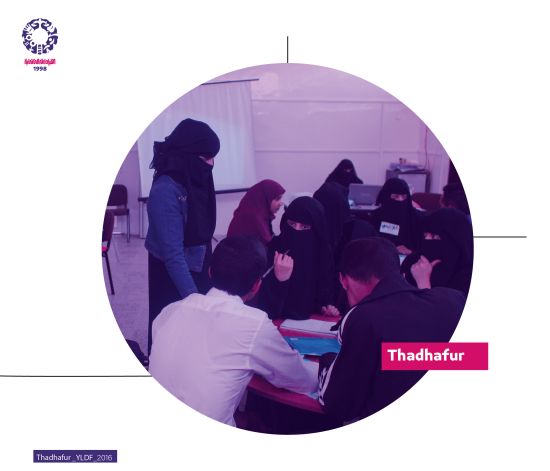
The chronological journey of the project unfolds through a meticulous sequence, beginning with the baseline alignment of market demands and cognitive skills. The initial phase launched with a rigorous Market Needs Assessment (MNA) for digital employment and a dedicated financial access study, followed immediately by the adaptation of specialized training curricula in information technology, soft skills, and business development. To ensure systemic institutional sustainability, the project completed advanced Training of Trainers (ToT) cycles for Hadramout University faculty members, who subsequently drove the academic instruction of the 525 beneficiaries. These young women were sub-divided into two tailored tracks: 200 women in business and entrepreneurial development, and 325 women in market employability skills, successfully enabling them to safely secure a reliable and autonomous income.
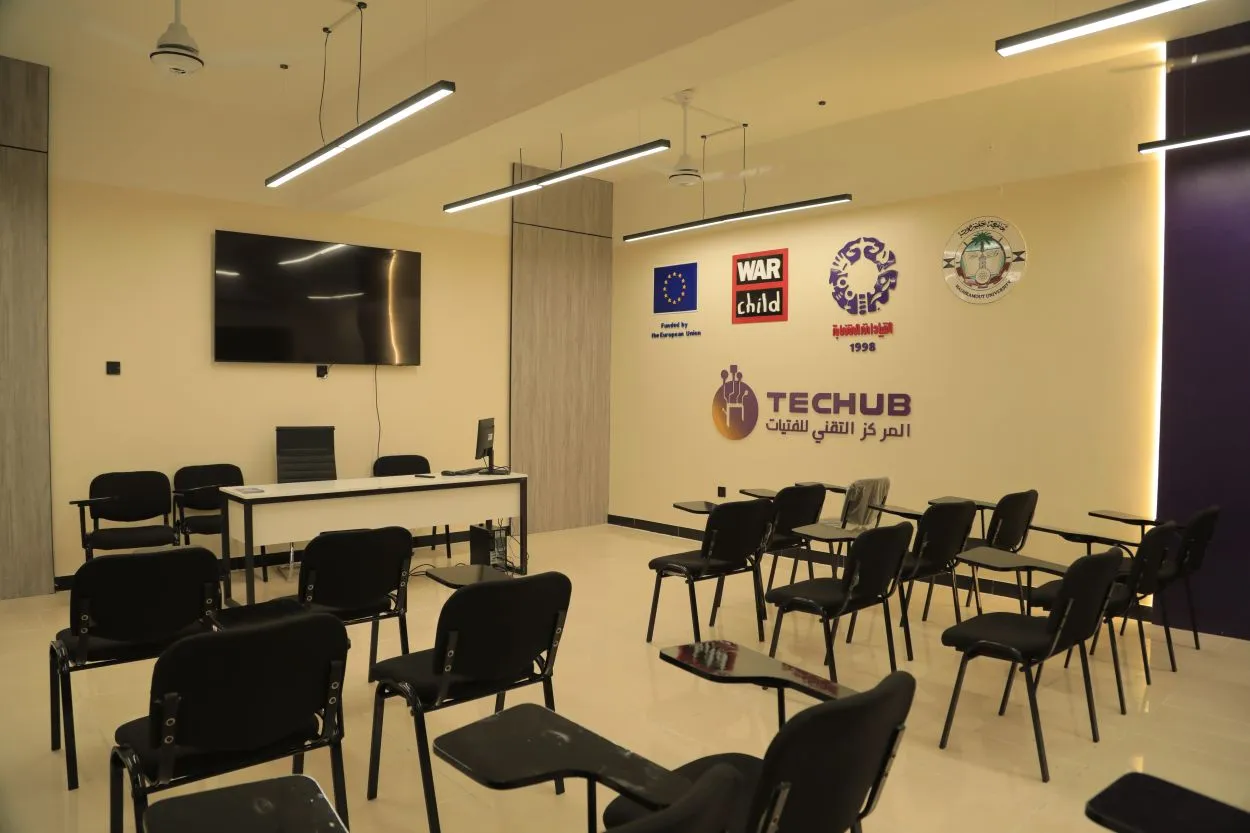
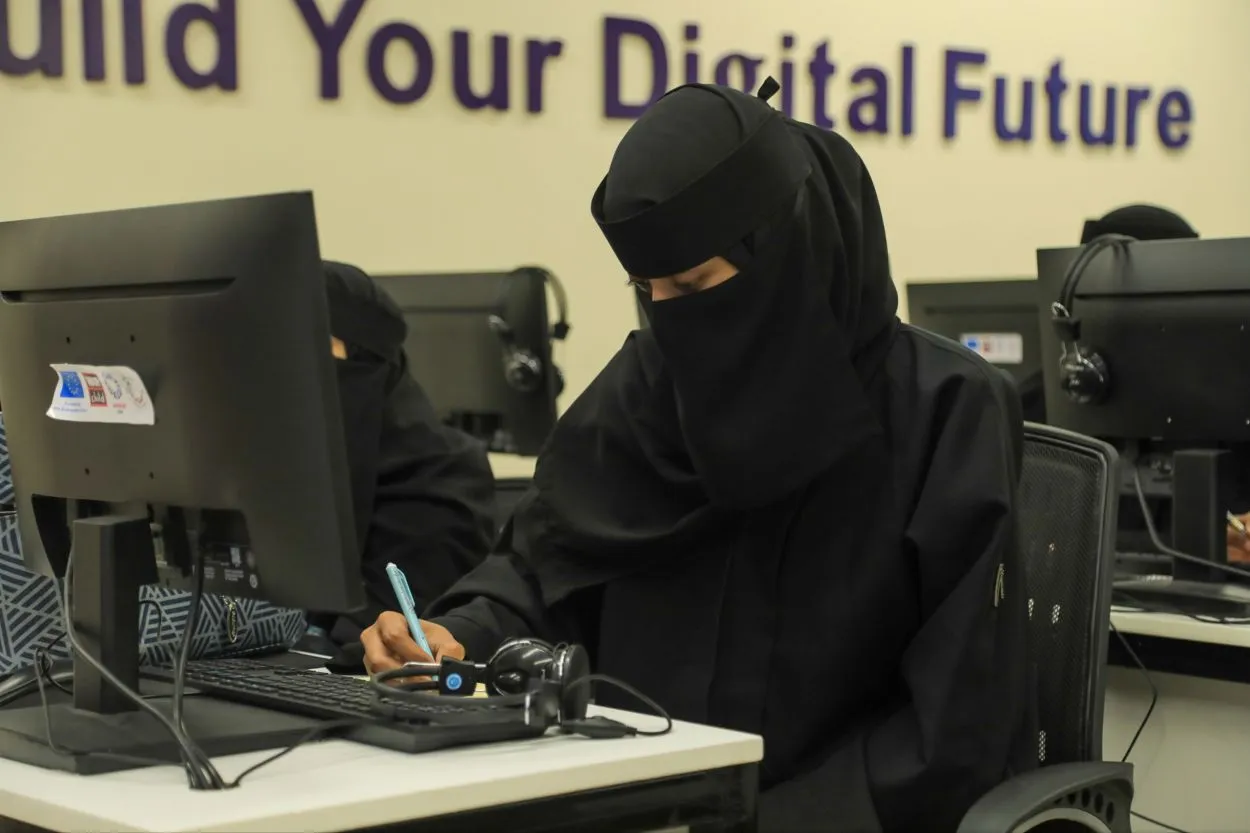
To actively translate these newly acquired competencies into market realities, the project advanced into its second operational phase by establishing a state-of-the-art educational safe space, the Tech Hub, within Hadramout University, fully optimized with advanced technological infrastructure and high-speed internet. To neutralize deep-seated socio-cultural barriers to participation, an institutional daycare facility was established directly within the Tech Hub, creating an uninterrupted learning and working environment for young mothers. This enabling ecosystem directly facilitated the provision of customized start-up kits, operational assets, and continuous mentorship for 100 selected young women to successfully launch their micro-enterprises. Concurrently, 100 additional women were placed into 6-month professional corporate internships within local and international private sector entities, a track that culminated in 2 high-profile job fairs that connected graduates directly with recruiters.
In its final phase, the project focused on engineering a highly receptive and protective cultural and communal environment. This was achieved by training 25 strategic advocates from youth organizations, media outlets, and CSOs on advocacy layout and online safeguarding protocols. This collective capacity resulted in the rollout of innovative public advocacy campaigns and specialized policy workshops with local administrative authorities, fostering widespread communal support for women's digital labor. The journey concluded with a robust visibility, learning, and communication strategy that captured and published the real-world success stories of these beneficiaries across the website and social platforms, fully documenting the project as an optimized, replicable development model ready to be scaled across other Yemeni regions, proving that digital financial inclusion for women is a cornerstone of modern recovery and peacebuilding.